 800122

Eyelet vs Pleated Curtains: Which One Should You Choose?

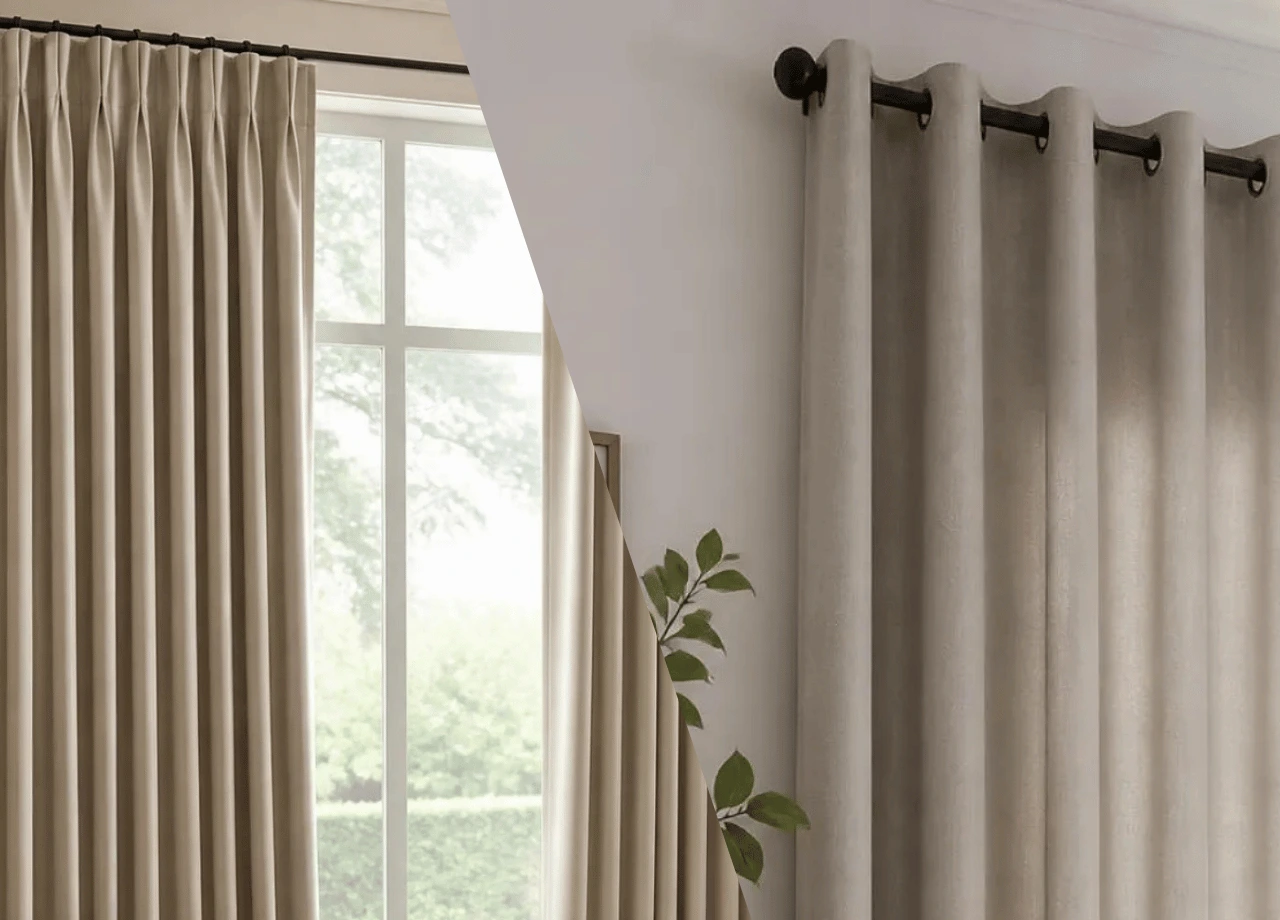
The short version: eyelet curtains give you a clean, modern hang with the easiest installation, while pleated curtains (pencil pleat, pinch pleat, or wave) give you a more tailored, structured look with better light control and, in most cases, better compatibility with motorized systems. Neither is objectively “better.” The right one depends on how the curtain will be used, not just how it looks in a photo.
Here is what actually separates them once you get past the surface-level style comparison.
What eyelet curtains are
Eyelet curtains, sometimes called ring-top or grommet curtains, have metal rings punched directly into the fabric header. A pole threads straight through the rings, so the curtain hangs in soft, even folds without any extra hardware. Strala’s eyelet curtains range covers this style across a range of fabric weights.
The main appeal is simplicity. There are no hooks, no tape, no separate rings to attach. You thread the pole and hang the panel. The folds also stay fairly consistent whether the curtain is open or closed, which gives a clean, uniform look that suits contemporary interiors.
What pleated curtains are
Pleated curtains gather the fabric into a shaped header before it’s hung, usually with hooks on a pole or a track. The three most common types are:
- Pencil pleat: tightly gathered, narrow folds created with header tape. Flexible on width, but the back of the header is visible and less tidy.
- Pinch pleat: fabric is stitched into defined clusters (double or triple pleats), giving a tailored, more formal appearance. See Strala’s pinch pleat curtains for how this looks made up.
- Wave: a newer style using a specialized tape and track system that creates smooth, consistent waves without the visible bunching of pencil pleat. Our wave curtains guide covers how this header bridges the gap between eyelet and pleat.
Pleated headers generally use more fabric than eyelet curtains, since the gathering itself takes up width. That’s part of why pleated curtains often look fuller and drape more heavily.
The comparison that actually matters
Light control and privacy. Eyelet curtains hang with a slight gap between folds by design, which lets a bit more light through even when fully closed. Pleated curtains, particularly pinch pleat and wave, sit closer together and block more light for the same fabric weight. If the room faces direct sun for most of the day, that gap can matter more than it looks like on a showroom rail.
Hardware compatibility. This is the part most comparison guides skip. Eyelet curtains need a pole, since the rings have to thread onto something rigid. They generally don’t work with a curtain track, which rules out motorized systems built around tracks. Pinch pleat and wave headers are designed to run on a track and glider system, which is what most motorized curtain setups are built on. If there’s any chance you’ll want to motorize the curtain later, that’s worth deciding before you commit to a heading style, not after.
Maintenance. Eyelet curtains are straightforward to clean since the fold is simple and there’s no internal structure to lose. Pleated curtains, especially pinch pleat, hold their shape through stitching and sometimes buckram inside the header. Machine washing can flatten that structure over time, so professional cleaning is usually the safer option if you want the pleats to keep their form.
Heat and everyday performance. In a hot climate with air conditioning running most of the day, the tighter overlap of a pleated header does a slightly better job of holding cool air in a room and keeping direct heat out, since less light and warm air pass through the gaps. Eyelet curtains can close this gap with a heavier or blackout-lined fabric, but the header style itself contributes less to insulation than pleats do. We go into this in more depth in our piece on whether thermal curtains actually lower AC bills.
Cost. Eyelet curtains typically use less fabric and require less labor to construct, so they tend to be the more budget-friendly option. Pleated curtains cost more mainly because of the extra fabric and the tailoring involved in forming the pleats.
A quick way to decide
- Want the simplest installation and a modern look: eyelet curtains.
- Want maximum light block and a more tailored appearance: pinch pleat.
- Want the look of pleats but need track or motorization compatibility: wave curtains.
- Working with a tight budget or a casual space like a kids’ room or study: eyelet curtains.
- Furnishing a formal living or dining space where the drape itself is part of the decor: pinch pleat.
Frequently asked questions
Can eyelet curtains be motorized? Not directly. Motorized systems are almost always track-based, and eyelet curtains are designed to hang on a pole. If motorization is a priority, a wave or pinch pleat header on a compatible track is the more practical choice.
Which style blocks more light? Pleated headers, particularly pinch pleat and wave, sit tighter together and block more light for a given fabric than eyelet curtains do. The difference becomes more noticeable with sheer or lightweight fabrics.
Do pleated curtains cost more than eyelet curtains? Usually, yes. Pleated styles use more fabric and more construction time to form and stitch the pleats, while eyelet curtains are simpler to make.
Which style is easier to maintain? Eyelet curtains are generally easier, since there’s no internal structure to preserve. Pleated curtains, especially pinch pleat, hold their shape better with professional cleaning rather than a washing machine.
Still not sure which heading style fits your windows, fabric choice, and whether you’re planning to motorize later? Book a free measure and fit and we’ll walk through eyelet, pinch pleat, and wave options against your actual room, not just a sample swatch. Whichever style you land on, our custom curtains range covers made-to-measure options for both.