 800122

Best Rust Proof & Stainless Steel Curtains for Dubai Homes

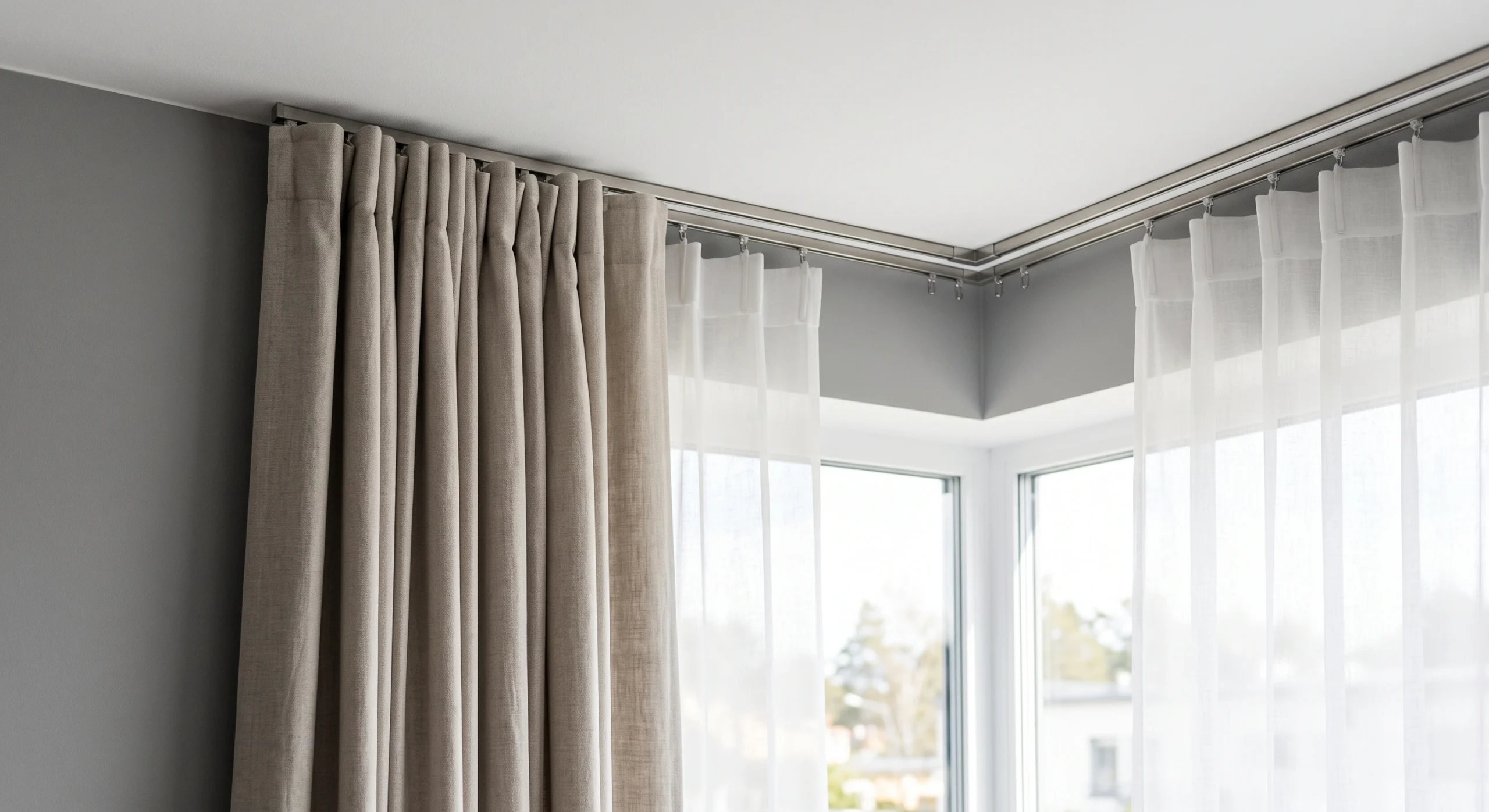
If your curtain rods, rings, or tracks are showing orange streaks, spotting, or a stiff, sticky glide within a year or two of installation, the problem is almost never the fabric. It is the hardware. In Dubai’s climate, humidity, salt-laden coastal air, and constant air conditioning cycles attack unprotected metal fast, and the wrong hardware choice can undo an otherwise good curtain setup within a single summer.
The short answer: stainless steel (ideally 316 grade near the coast) and anodized aluminum are the most reliable rust proof options for curtain rods, tracks, rings, and brackets in the UAE. Powder-coated iron and cheap chrome-plated steel look fine on day one and start corroding once the coating is scratched or the humidity gets to the metal underneath.
Here is what actually causes the corrosion, which materials hold up, and how to choose hardware that will still glide smoothly in five years, not five months.
Why curtain hardware rusts faster in the UAE than almost anywhere else
Three things work against metal hardware here at the same time.
- Humidity. Coastal Dubai regularly sits above 60 to 80 percent relative humidity for much of the year, especially overnight and in the early morning. That moisture settles on any exposed metal, including rods, brackets, grommets, and rings.
- Salt air. Homes near the coast, the Marina, JBR, Palm Jumeirah, and similar areas deal with airborne salt that accelerates corrosion far faster than humidity alone. Salt breaks down protective coatings and speeds up pitting on lower-grade steel.
- AC condensation cycles. Constant switching between cold, air-conditioned interiors and hot, humid air outside creates repeated condensation on window fittings, curtain tracks, and brackets mounted near windows or on external walls. That cycle of wet and dry is one of the most common reasons hardware corrodes indoors, not just outdoors.
None of these factors are unique to outdoor curtains, which is worth pointing out because most rust proof curtain guides online are written for patios and porches. In Dubai, the same corrosion risk exists inside a bedroom or living room, particularly in ground floor units, villas with garden-facing windows, or apartments closer to the water. We’ve covered the fabric side of this same problem in a related piece on how humidity and sun exposure affect curtains, which is worth reading alongside this guide if you’re troubleshooting a curtain that’s failing faster than expected.
Where rust actually starts on a curtain setup
Rust rarely begins with the visible rod. It usually starts at the smaller, cheaper components:
- Grommets and eyelets, especially on ready-made curtains that use thin plated metal rather than solid stainless steel. This is the main reason we recommend checking hardware grade closely on eyelet curtains, since the eyelet itself carries most of the weight and the most direct moisture exposure.
- Curtain rings, particularly the ones with plastic-coated hooks over a metal core that corrodes once the coating chips.
- Brackets and screws, which sit against the wall and trap moisture behind them where it is least visible.
- Track gliders, where corrosion causes the stiff, dragging motion people usually blame on the curtain fabric rather than the hardware. A stuck glider puts uneven strain on the rest of the rail, which is why this is worth catching early.
If you are only checking the rod itself for rust and ignoring the rings, brackets, and fixings, you are looking at the wrong part of the system.
304 vs 316 stainless steel: which one actually matters here
Both are used in curtain hardware, and the difference between them is not marketing language.
304 stainless steel contains chromium and nickel, which gives it strong resistance to everyday humidity and moisture. It is a solid choice for most inland Dubai homes and works well for curtain rods, tracks, and brackets away from direct coastal exposure or heavy salt air.
316 stainless steel adds molybdenum to that same base composition, which significantly improves resistance to chloride, the compound responsible for salt-driven corrosion. It is the standard used in marine hardware for a reason. For homes in coastal or Marina-facing buildings, or for bathrooms and balconies where moisture is constant, 316 is worth the extra cost.
Aluminum, particularly anodized aluminum, is the other reliable option. It does not rust in the traditional sense because it does not contain iron, and anodizing adds a protective oxide layer on top. It is lighter than stainless steel, which matters for wide tracks or motorized setups, though it is generally less rigid under heavy drapery loads than stainless steel of the same diameter.
What to avoid: powder-coated iron and standard chrome-plated steel. Both perform fine until the coating is scratched during installation or daily use, at which point the exposed metal underneath corrodes quickly in this climate. Once rust starts under a coating, it spreads beneath the surface even if the outside still looks intact.
A common mistake we see in Dubai homes: mixing metals
One issue that rarely gets mentioned is galvanic corrosion, which happens when two different metals are in direct contact with moisture between them, such as a stainless steel rod hung on iron brackets, or stainless steel rings on a lower-grade rod. The less noble metal corrodes faster than it would on its own. If you are upgrading hardware, it is worth replacing the full set (rod, rings, brackets, and fixings) in matching materials rather than mixing a new rod with old brackets.
A simple buying checklist for Dubai homes
- Confirm the actual metal grade, not just “rust resistant” on the label. Ask specifically whether it is 304 or 316 stainless steel, or anodized aluminum.
- For coastal or Marina-facing homes, prioritize 316 stainless steel or anodized aluminum over 304.
- Match all hardware components in the same material to avoid galvanic corrosion between rods, rings, and brackets.
- For bathrooms, kitchens, and balconies, treat these as high-humidity zones even if they are indoors, and choose hardware accordingly.
- Check the glide mechanism under load. A track that corrodes at the glider will stick and drag long before the rod itself shows visible rust.
- Get bracket spacing and wall anchoring right from the start. Our curtain rod placement guide covers the spacing that keeps brackets from bearing uneven load, which also reduces the moisture-trapping stress points that speed up corrosion.
At Strala, our free home visit includes an assessment of exactly this: what your windows are exposed to, whether you are coastal or inland, and which track, rod, or motorized curtain track will actually hold up rather than just look good at handover. Our stainless steel and aluminum tracks are selected with this climate in mind, and every installation comes with a 30-day workmanship warranty and up to 5 years on motorized systems.
Maintenance that actually extends hardware life
Even the right material benefits from basic upkeep:
- Wipe down rods, rings, and brackets every few months with a dry or slightly damp cloth, especially in coastal homes. Dust combined with humidity is what causes surface spotting over time.
- Avoid harsh cleaning chemicals or abrasive pads on stainless steel finishes, which can strip the protective layer and expose the metal to faster corrosion.
- Check gliders and rings for stiffness periodically. Caught early, a sticky glide is a five-minute fix. Left alone, it usually means replacing the affected section.
Frequently asked questions
Does stainless steel rust in Dubai?
Properly graded stainless steel (304 or 316) does not rust under normal conditions in Dubai. What people usually mistake for stainless steel rusting is actually lower-grade chrome-plated steel sold under a similar description.
Is aluminum or stainless steel better for humidity?
Both perform well. Anodized aluminum is lighter and does not rust since it contains no iron, while stainless steel is generally more rigid for heavier drapery and wider spans. For coastal homes, 316 stainless steel and anodized aluminum are both strong choices.
How often should curtain hardware be replaced in the UAE?
There is no fixed timeline, since it depends on material grade and location. Quality stainless steel or aluminum hardware, properly matched and maintained, typically lasts well beyond a decade. Lower-grade coated hardware in coastal or high-humidity areas can start showing corrosion within one to two years.
Can I replace just the rusted parts instead of the whole track?
You can, but matching a new component to old, corroded hardware often reintroduces the galvanic corrosion problem described above. It is usually more reliable to replace the full set in one consistent material.
If your curtains are sticking, dragging, or showing early signs of corrosion, book a free home visit and we will assess your hardware and recommend the right material for your specific building and orientation, not just a generic “rust resistant” label. If you’re planning a full refresh rather than just a hardware swap, our custom curtains range is a good next stop.